

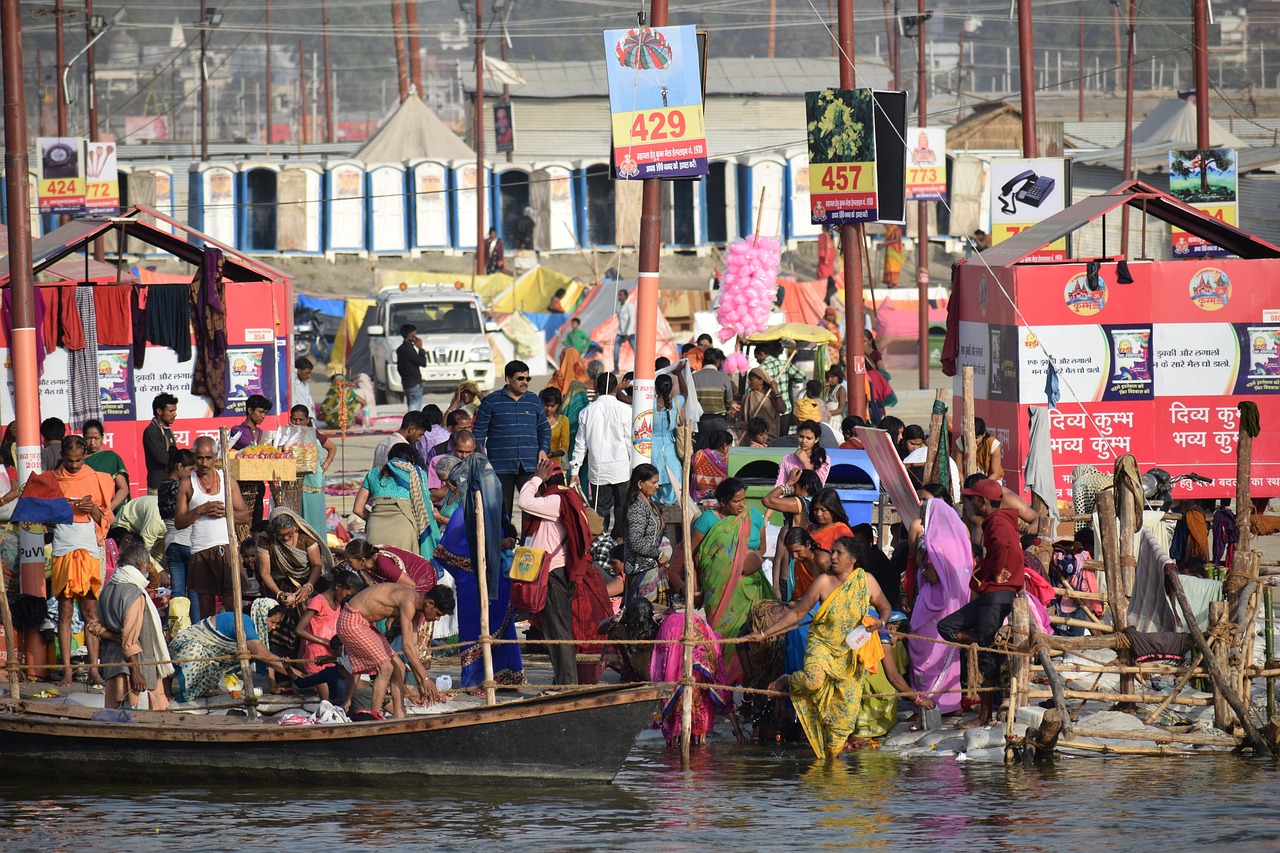

The Maha Kumbh Mela, often hailed as the world’s largest religious congregation, is set to commence in Prayagraj on January 13, 2025. This event, deeply rooted in Hindu mythology and tradition, attracts millions of devotees from across the globe, all converging at the sacred Triveni Sangam—the confluence of the Ganga, Yamuna, and the mythical Saraswati rivers. The 2025 edition holds special significance as it marks the completion of 12 Kumbh Mela cycles, a once-in-144-years occurrence, amplifying its spiritual importance.
Historical and Mythological Significance
The origins of the Kumbh Mela are steeped in ancient Hindu mythology. According to legend, during the cosmic churning of the ocean (Samudra Manthan), a pot (kumbh) containing the nectar of immortality emerged. In the ensuing struggle between gods and demons for its possession, drops of this sacred nectar fell at four earthly locations: Prayagraj, Haridwar, Ujjain, and Nashik. These sites became sanctified, leading to the cyclical observance of the Kumbh Mela at each location.
Astrological alignments play a pivotal role in determining the timing of the Kumbh Mela. In Prayagraj, the festival is held when Jupiter resides in Taurus, and the Sun and Moon are in Capricorn. This celestial configuration is believed to imbue the waters at the Sangam with extraordinary purifying properties, making it the most auspicious time for ritual bathing.
Preparations and Infrastructure
Hosting an event of such magnitude necessitates meticulous planning and extensive infrastructure development. The Uttar Pradesh government, in collaboration with various agencies, has undertaken massive preparations to accommodate the anticipated influx of pilgrims. A sprawling tent city has been erected along the riverbanks, equipped with essential amenities to ensure the comfort and safety of visitors. This temporary metropolis includes thousands of tents, sanitary facilities, medical centers, and food provisions. Advanced technologies, including artificial intelligence and extensive surveillance systems, have been deployed to manage crowd movements and enhance security measures.
Economic Impact
The Maha Kumbh Mela significantly contributes to the regional and national economy. The Confederation of All India Traders (CAIT) estimates that the 2025 festival could generate approximately ₹2 trillion in trade. This economic boost is attributed to increased demand in sectors such as transportation, hospitality, retail, and tourism. Local businesses, artisans, and vendors particularly benefit from the surge of pilgrims and tourists, leading to widespread economic stimulation in the region.
Spiritual Significance and Rituals
At the heart of the Kumbh Mela lies its profound spiritual significance. Devotees believe that immersing themselves in the sacred waters during this auspicious period absolves them of sins and liberates them from the cycle of rebirth. The festival’s schedule is punctuated by specific bathing dates, known as ‘Shahi Snans’ or royal baths, which are considered the most propitious times for purification rituals. These dates are meticulously determined based on astrological calculations and are eagerly awaited by pilgrims.
The festival also serves as a congregation for sadhus (holy men) from various sects, including the renowned Naga sadhus, who are known for their austere practices and ash-smeared bodies. Their presence adds a unique spiritual fervor to the event, as they lead processions and participate in ritualistic ceremonies, embodying the ascetic traditions of Hinduism.
Challenges and Management
Managing a gathering of this scale presents numerous challenges, including crowd control, sanitation, health services, and security. Authorities have deployed over 50,000 security personnel and installed thousands of CCTV cameras to monitor activities and ensure the safety of attendees. Additionally, measures have been implemented to address environmental concerns, such as maintaining the cleanliness of the river waters and managing waste generated during the festival. Public health initiatives, including vaccination drives and medical camps, have been established to mitigate health risks and provide immediate medical assistance when necessary.
Cultural and Social Dimensions
Beyond its religious aspects, the Kumbh Mela is a vibrant cultural spectacle. It offers a platform for artists, musicians, and performers to showcase traditional art forms, enriching the cultural tapestry of the event. The festival fosters a sense of unity and shared identity among the diverse participants, transcending social and economic boundaries. It also attracts scholars, photographers, and tourists worldwide, keen to witness and document the grandeur of this unparalleled human gathering.
Conclusion
The Maha Kumbh Mela 2025 in Prayagraj epitomizes the enduring allure of faith and tradition in contemporary society. Its seamless blend of ancient rituals with modern organizational prowess underscores India’s capacity to honor its rich heritage while adapting to present-day exigencies. As millions converge at the sacred Sangam, the festival stands as a testament to the timeless human quest for spiritual enlightenment and communal harmony.
AI generated content with inputs from different news sources on internet.

